
February
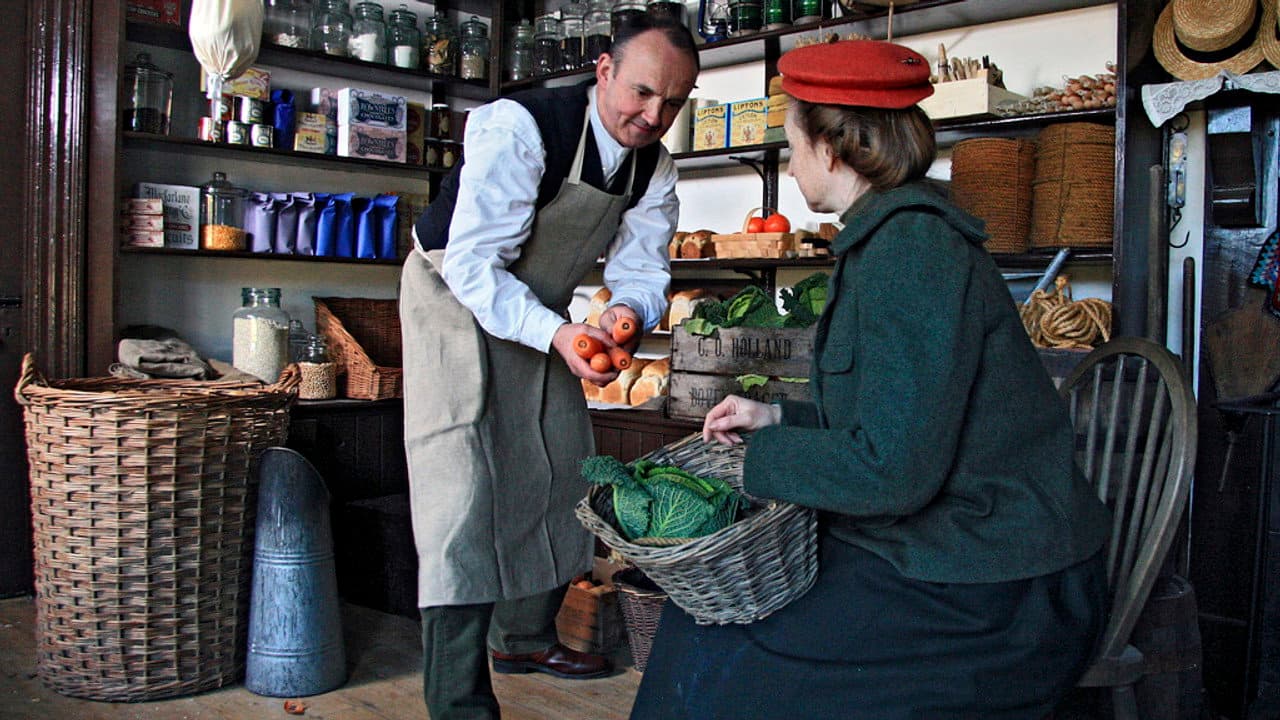
To mark the half-way point of their sociological experiment, Alex Langlands, Peter Ginn and Ruth Goodman, explore a single day in an Edwardian farmer's household. Using a cache of letters from the time found in Morwhellham to research the realities of life, the trio experience typical daily routines, from the usual early morning hair-styling and oral hygiene, to the end-of-the-day trip to the local pub. It is February and archaeologists Alex Langlands and Peter Ginn and historian Ruth Goodman approach the halfway point in their year on the Edwardian Farm. To mark the occasion this episode explores one single day in a typical Edwardian farmer's life. Incorporating a remarkable cache of letters written in the 1900s in a cottage at Morwhellham Quay, 'A Day in the Life' reveals the hidden stories of how ordinary rural Edwardians got by. We see how Edwardians prepared for the day when they got up in the morning - from struggling into a corset and Edwardian hair-styling, to shaving and what they used to brush their teeth. Through the day we follow the team's routine - managing the animals; re-stocking the feed-store; tending the land; caring for an injured goose that's been attacked by a fox; going shopping; receiving a visit from an eccentric travelling salesman; and a football match against the Plymouth Argyle legends played under strict Edwardian rules - which means no offside, no red or yellow cards, and wearing very, very heavy boots. And in between, of course, there's breakfast, lunch, dinner and a visit to the local pub to round off the day.
Player
Primary streaming server.
More from this season
S1 E1
September
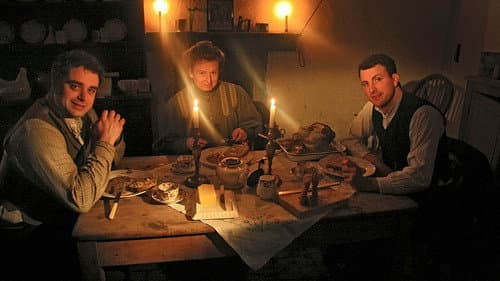
In September they begin with the basics. They set up home in one of the cottages, where the first task - after cleaning - is unblocking the chimney so they can get the range working in order to cook. They prepare for the arrival of their first livestock - a flock of sheep and a ram called Cyril, and Ruth cheers up the cottage by making a rug out of rags. And she cooks her first meal on the range - a sheep's head stew. Alex builds a hay rick to store feed for the animals over winter; while Peter heads to Bodmin moor to carve a stone feeding trough. And they must plant crops. The high acidity of the soil makes it infertile for growing crops, so the top priority is neutralising the acid with fertilizer - and for this they must make deadly quicklime. They will need literally tonnes of the stuff. It is a hazardous and gruelling - but essential - job.
S1 E2
October
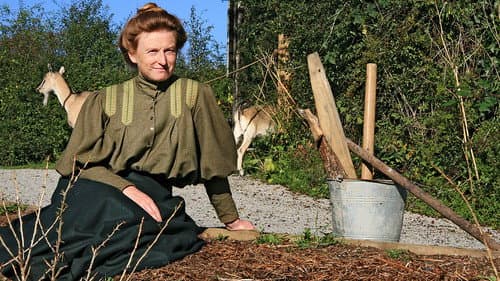
In October, the Edwardian farmers branch out into new ventures like market gardening, all-year-round egg production and beef cattle. After acquiring a beef herd, the team bring in a bull. They also begin training the shire horses for a year of work in the fields. And they take on a pair of goats who prove to be more than a handful at milking time. Morwellham Quay's market gardens were once one of the nation's largest producers of strawberries, until abandoned half a century ago. Now the team attempt to bring them back to life. Cider was a vital part of the Edwardian rural economy, so Alex and Peter attempt to follow in this tradition by making it on an industrial scale - using an Edwardian cider press and a ton of apples. Ruth preserves supplies for the winter: she pickles apples, salts a ham and smokes bacon. Peter visits a cooper and learns how to make a barrel, and Alex launches a chicken enterprise. Finally they see in the winter with Halloween - Edwardian style.
S1 E3
November
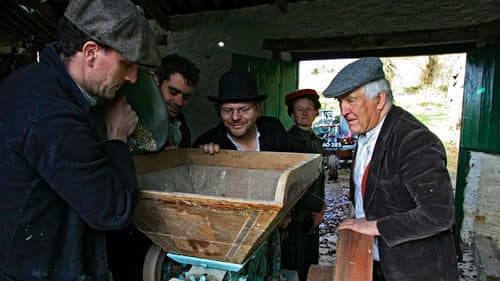
Archaeologists Alex Langlands and Peter Ginn and historian Ruth Goodman are in Morwellham Quay in Devon - once home to one of the busiest ports in Britain. They will be attempting to bring it back to life as it was in its Edwardian heyday. It's November and to prosper as Edwardian farmers, Alex, Peter and Ruth need to get to grips with the technologies of the age and use Edwardian science to set up an exciting new venture on the farm. Alex and Peter want to grow oats, essential as feed for their livestock, and potatoes, a reliable source of income. But first they must plough the land. Most Edwardian farmers still relied heavily on horse power, but new technology was on the horizon. A travelling salesman makes a dramatic entrance bringing a piece of the state-of-the-art machinery from the Edwardian age - the world's first tractor, the Ivel. Ruth prepares for the arrival of the farm's pigs by restoring the farm's pig sty privy - an ingenious construction combining a pig sty with a lavatory so that pig waste and human waste could be composted in one place. After introducing the pigs to their new home, Ruth grooms them. Peter embarks on building a trout farm and populating it by using revolutionary fish-breeding techniques that were new to Devon's Edwardian farmers. And Alex wants to maintain the farm's hedgerows - but first he'll need to learn how to forge a Devon billhook using water-powered technology. After all their hard work, Ruth cheers the team up by making sloe gin and acquiring an Edwardian musical novelty - a gramophone.
S1 E4
December
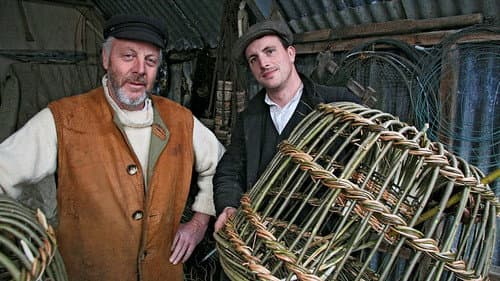
Archaeologists Alex Langlands and Peter Ginn and historian Ruth Goodman are in Morwellham Quay in Devon - once home to one of the busiest ports in Britain. They will be attempting to bring it back to life as it was in its Edwardian heyday. It's December and, as winter sets in, Alex, Peter and Ruth face the challenge of earning a living in one of the hardest months of the year. They'll have to profit from their livestock, leave the farm in search of part-time work and head to the coast to reap the ocean's bounty. With poverty rife in the countryside, Edwardian farmers often had to find additional work away from their land. Alex and Peter follow in the footsteps of Tamar Valley farmers who traditionally took advantage of living between the North and South Devon coasts to profit from the county's other great industry - sea fishing. Ruth follows the growing number of Edwardian women who entered domestic service. She goes to a grand Edwardian stately home, Lanhydrock House, where she encounters luxurious novelties such as running water, electric lights and even prototype vacuum cleaners. But when Alex and Peter have little luck on their seafaring fishing expedition, Ruth has to prepare a poor man's Christmas lunch.